High-Density Power for AI & Cloud: Planar Magnetics in Data Centers
In the fast-paced world of technology, artificial intelligence (AI) and cloud computing are reshaping how we process, store, and access data. At the heart of this transformation are data centers: massive facilities humming with servers that demand unprecedented levels of power. As AI models grow more sophisticated and cloud services expand to handle everything from streaming to enterprise analytics, the need for high-density power solutions has never been more critical. Enter planar magnetics, a cutting-edge technology that's enabling more efficient, compact power delivery in these environments.
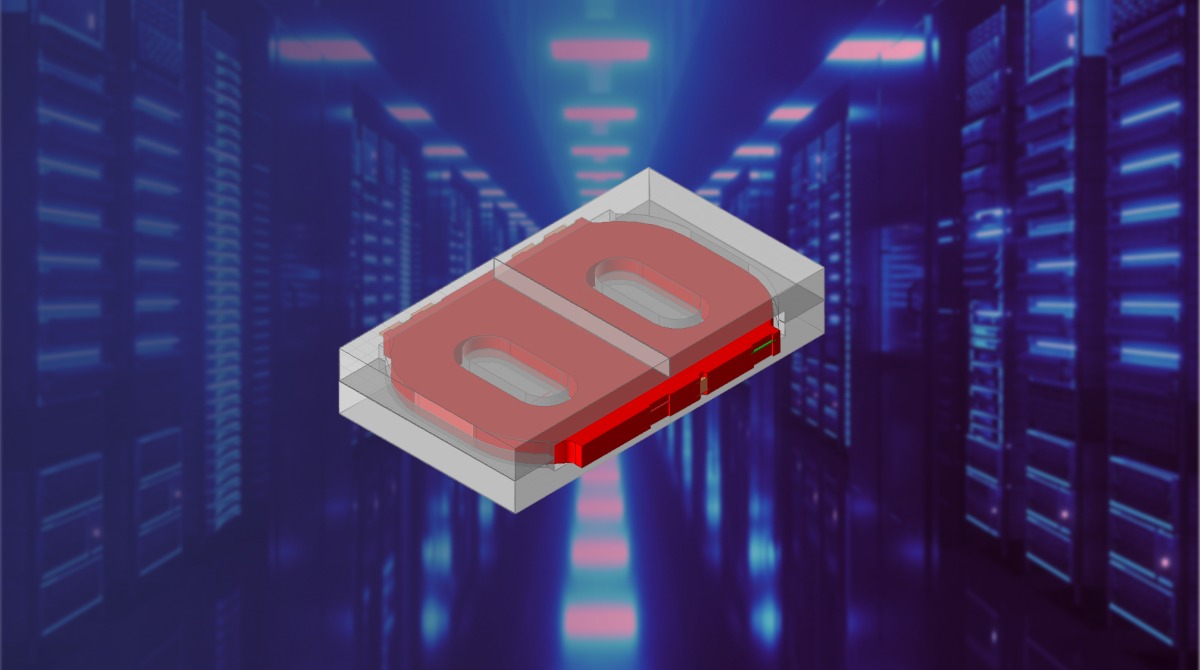 Planar magnetics aren't just another buzzword; they're a practical answer to the escalating challenges of powering modern data centers. By replacing traditional wire-wound transformers with flat, printed circuit board (PCB)-based designs, this technology offers superior performance in high-frequency applications. For businesses relying on AI and cloud infrastructure, understanding how planar magnetics enhance power density can mean the difference between seamless operations and costly downtime. In this article, we'll explore the rise of these demands, the role of planar magnetics, and how they're being applied to keep data centers running smoothly.
The Surging Demand for Power in AI and Cloud Data Centers
Data centers have always been energy hogs, but the advent of AI has supercharged their appetite. According to recent estimates, data centers accounted for about 4% of total U.S. electricity use in 2024, with projections showing this could more than double by 2030. Globally, electricity consumption from data centers is around 415 terawatt-hours (TWh) today, and it's forecasted to climb to as much as 1,479 TWh by 2030—a staggering growth driven largely by AI workloads.
Why the spike? AI training and inference require immense computational power, often involving graphics processing units (GPUs) that consume far more energy than standard servers. For instance, traditional server racks might draw 5-15 kilowatts (kW), but AI-optimized ones can demand 40-60 kW or more. By 2027, some AI server rack designs could require up to 50 times the power of those powering the internet today. Cloud computing adds another layer, as providers like hyperscalers scale up to meet global demand for on-demand resources.
This growth isn't just statistical. It's tangible. In the U.S. alone, data centers could need an additional 10 gigawatts (GW) of power capacity in 2025, equivalent to the entire output of a state like Utah. For context, AI data center power consumption might reach 8-12% of total U.S. electricity by 2030, up from 3-4% currently. These figures highlight a pressing need: data centers must evolve to handle higher power densities without overwhelming grids or inflating operational costs.
Beyond raw consumption, the shift to AI and cloud means data centers are packing more processing power into smaller spaces. High-density computing racks are becoming the norm, pushing power requirements per square foot to new heights. This trend is accelerating infrastructure upgrades, from cooling systems to power distribution, all while emphasizing sustainability. As regulators and companies aim for net-zero goals, efficient power management isn't optional-it's essential.
Challenges in Delivering High-Density Power
Meeting these demands isn't straightforward. Traditional power supplies in data centers often struggle with the heat, size, and efficiency required for high-density setups. As racks densify, thermal management becomes a bottleneck; excess heat from inefficient components can lead to failures or reduced lifespan.
Power conversion losses are another hurdle. In conventional systems, transformers and inductors can waste energy through heat dissipation, especially at high frequencies needed for AI workloads. Space constraints exacerbate this, data centers are expensive real estate, and bulky components eat into valuable floor space.
Reliability is key too. Downtime in AI or cloud operations can cost millions, so power systems must be robust, with minimal electromagnetic interference (EMI) and consistent performance under varying loads. Legacy data centers, designed for 5-10 kW per rack, are ill-equipped for the 50 kW+ demands of modern AI servers. This mismatch forces operators to rethink power architectures, seeking solutions that offer scalability without compromising safety or cost.
Enter the push toward higher voltage infrastructures, like 800 VDC systems, to support megawatt-scale racks by 2027. But implementing these requires innovative magnetics that can handle the stress while maintaining compactness.
Introducing Planar Magnetics Technology
So, what exactly are planar magnetics? Unlike traditional transformers that use wound wires around a core, planar magnetics embed windings directly into multilayer PCBs or flat copper foils. This design creates a low-profile, compact component ideal for high-frequency power electronics.
The technology shines in power conversion, where it enables smaller, lighter devices without sacrificing output. Key features include:
- High Power Density: Planar designs pack more power into less space, perfect for dense data center environments.
- Improved Thermal Performance: flat structures dissipate heat more evenly, reducing hotspots and enhancing reliability.
- Efficiency Gains: lower leakage inductance and resistance mean less energy loss, often achieving efficiencies above 98% in high-frequency applications.
- Customization Flexibility: easy to tailor for specific voltages, currents, or frequencies, making them adaptable to AI and cloud needs.
Planar magnetics operate effectively at frequencies from hundreds of kilohertz to megahertz, aligning with the switch-mode power supplies (SMPS) common in data centers. This high-frequency capability reduces the size of passive components, leading to overall system miniaturization.
From a manufacturing standpoint, planar technology allows for automation, which cuts costs and improves consistency compared to manual winding. It's no wonder this approach is gaining traction in power electronics, offering a scalable path to meet evolving demands.
How Planar Magnetics Revolutionize Data Center Power Supplies
In data centers, planar magnetics are game-changers for high-density power delivery. They enable compact power supply units (PSUs) that fit seamlessly into server racks, supporting the intense loads of AI accelerators and cloud servers.
One major advantage is in handling high power densities. As AI pushes rack power to 60 kW and beyond, planar transformers provide the necessary isolation and voltage regulation with minimal footprint. Their low-profile design, often thinner than traditional alternatives, allows for better airflow and cooling, crucial in heat-packed facilities.
Efficiency is another win. By minimizing losses in power conversion, planar magnetics help data centers reduce overall energy use, aligning with green initiatives. For example, in high-frequency resonant converters, they offer better performance and thermal management, essential for maintaining uptime.
Moreover, these components excel in reducing EMI, ensuring clean power delivery that doesn't interfere with sensitive electronics. In cloud setups, where scalability is paramount, planar magnetics support modular designs that can be easily upgraded.
Real-world applications underscore their value. In AI training clusters, they facilitate ultra-high power density supplies, while in cloud edge computing, their compactness enables distributed power architectures. Overall, planar magnetics bridge the gap between growing power needs and practical implementation, fostering more resilient data centers.
Payton Group: Innovating Planar Magnetics for Modern Data Centers
As a global leader in planar magnetics technology, Payton Group is at the forefront of delivering solutions tailored for high-density power in AI and cloud environments. With decades of experience, Payton specializes in custom planar transformers and inductors that prioritize efficiency, reliability, and compactness.
Payton's planar products stand out for their ability to handle high frequencies and power levels, making them ideal for data center PSUs. For instance, their designs offer significant size reductions, often up to 50% smaller than conventional options, while maintaining superior thermal properties. This is achieved through innovative PCB-integrated windings that ensure low losses and high performance.
What sets Payton apart is their focus on customization. Whether it's for AI server farms requiring robust isolation or cloud infrastructures needing scalable power modules, Payton's engineers collaborate closely with clients to develop optimized solutions. Their technology supports cost-effective, high-speed manufacturing, ensuring quick turnaround without compromising quality.
In data centers, Payton's planar magnetics contribute to energy-efficient systems that meet the demands of modern computing. By leveraging their expertise, operators can achieve higher power densities, lower operational costs, and enhanced sustainability— all while future-proofing their infrastructure.
Looking Ahead: The Future of Power in Data Centers
As AI and cloud computing evolve rapidly, high-density power solutions like planar magnetics will play an increasingly vital role. Global data center electricity consumption is projected to double by 2030, reaching about 945 terawatt-hours (TWh) in a base scenario, fueled by AI's massive computational needs. In the U.S., data centers already consume around 4% of total electricity in 2024, a figure that could more than double by decade's end, with power demands potentially surging by 165%. This growth demands innovative power architectures, where planar magnetics excel by enabling compact, efficient conversion at higher frequencies for megawatt-scale loads.
Looking further, by 2035, U.S. AI data centers might require up to 123 gigawatts (GW) of power (a thirtyfold jump) necessitating advancements that enhance density and reduce waste. Planar designs integrate well with emerging tech like gallium nitride (GaN) and silicon carbide (SiC) for 800 VDC systems, improving efficiency and footprints. Sustainability is key, as these components minimize losses and support renewable integration, while standardization in planar magnetics could address the tripling of data center demand by 2030, aiding edge computing for 6G and real-time AI.
In this dynamic future, where quantum computing and advanced AI intensify power needs, planar magnetics offer low-profile reliability and reduced interference for modular systems. Partnering with leaders like Payton Group ensures access to cutting-edge, customized solutions that tackle current challenges and anticipate tomorrow's, powering digital progress efficiently and sustainably.