
Planar Magnetics in the Quantum Cryostat Stack
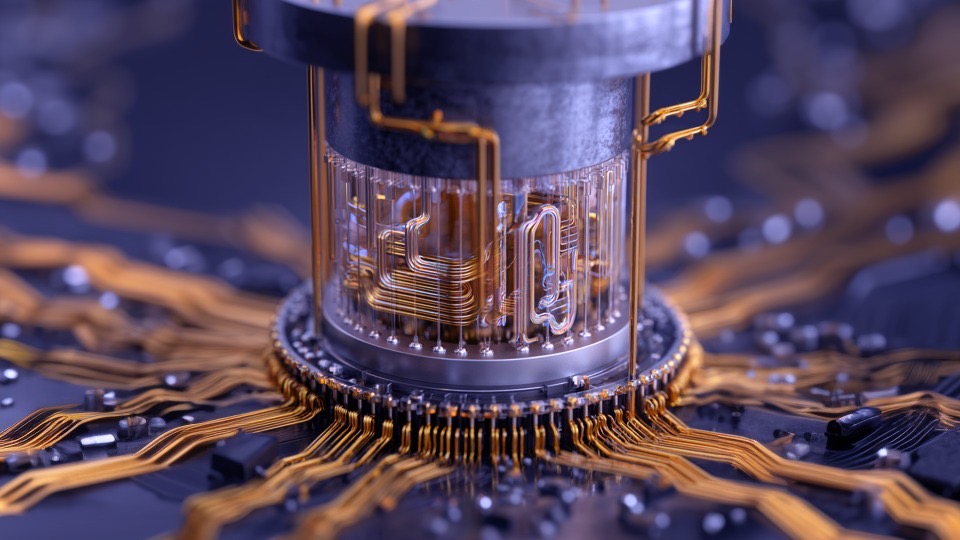 Quantum computers don’t just need qubit, they need an entire stack of electronics and passives that can survive temperatures close to absolute zero, often with 30-70% smaller magnetic components than conventional designs. In this article we focus on planar magnetics across the cryostat stack (typically under 5-7 mm height with ±5-10% capacitance tolerance) while the following article dives deeper into how planar transformers behave right next to cryogenic quantum processors and qubit control electronics.
Why Quantum Stacks Need Rethought Magnetics
Most scalable quantum computing systems are built as layered structures: room-temperature racks at the top, multiple cryogenic stages (80K, 40K, 4K) in the middle, and the qubit plane at the bottom around 10-20 mK. Each layer imposes severe constraints on power dissipation (often microwatts at 4K), size, and electromagnetic noise.
Magnetic components span this entire stack. Transformers handle power isolation from 100 kHz to 10 MHz; inductors filter RF control lines in the GHz range; chokes clean up bias networks. At the 4K stage, every milliwatt of dissipation directly limits qubit count and coherence time. Planar magnetics deliver this functionality in 5-7 mm height packages (vs 15-25 mm for equivalent wound transformers) with leakage inductance tuned to ±10% via μm-scale layer spacing - attributes already proven in Payton Planar’s high-reliability medical and automotive planar transformers.
How Planar Magnetics Behavior Changes at Cryogenic Temperatures
Cryogenic physics transforms magnetic performance
At 4K, copper resistivity drops dramatically: RRR (Residual Resistivity Ratio) often exceeds 100:1 compared to room temperature. Skin depth shrinks from ~65 μm at 1 MHz to under 10 μm, concentrating high-frequency currents in thinner layers and reducing AC losses by 50-80%.
Magnetic cores face bigger unknowns. Ferrite permeability typically increases 10-30% down to 77K but may saturate or show hysteresis anomalies below 20K. At millikelvin temperatures, many designs avoid cores entirely, relying on air-core planar inductors where Q-factors can exceed 10,000 at cryogenic RF frequencies.
Planar geometry shines here. Copper planes provide thermal paths with 0.1-0.5 W/K conductance directly to cold plates, far better than wound structures where heat bottlenecks in wire bundles. Layered PCB construction also survives 1.5-2% linear contraction from 300 K to 4 K without delamination when using low-CTE substrates like Rogers 4003C.
Planar vs Alternatives at Cryogenic Stages
| Feature | Planar | Wound | Air-core |
|---|---|---|---|
| Profile | Excellent (5-7 mm) | Poor (15-25 mm) | Excellent (<3 mm) |
| Parasitics | Controlled (±5-10%) | Variable (±25%) | Low but fixed |
| Repeatability | High (±2% unit-to-unit) | Medium (±15%) | High |
| Cryo suitability | High (RRR-optimized) | Medium (wire movement) | High (no core) |
| Integration | Excellent (PCB-native) | Poor | Medium |
Why magnetics become a bottleneck as you scale
As systems move from tens to thousands of qubits, cabling and thermal budgets become major bottlenecks. Every additional coax line introduces both conduction heat and complexity. This is driving a trend toward more integration of control electronics and passive components inside the cryostat, closer to the qubits.
Magnetic components that once sat comfortably on a warm bench now must:
- Fit on crowded, multi-layer cryogenic PCBs.
- Maintain predictable behavior as they cycle between room temperature and cryogenic operation.
- Contribute as little as possible to the thermal load while still performing isolation and filtering tasks.
Planar Magnetics in Cryostat Power Delivery and Filtering
Power conversion: 100 kHz to 10 MHz architectures
Cryogenic DC/DC converters target >90% efficiency at 1-10 MHz to minimize heat. Planar transformers enable this by supporting 20-30% smaller cores at higher frequencies while maintaining <50 nH leakage inductance for zero-voltage switching. Payton’s high-layer-count planar designs (up to 20+ layers) deliver 3-5x power density over wound equivalents in the same footprint.
Example: A 4K stage supplying 1-3 V rails to cryo-CMOS might use a planar flyback transformer (5 mm height, 10:1 turns ratio) fed from a 40 V/80 K intermediate rail, achieving 92% efficiency with <100 μW standby loss - impossible with bulkier wound magnetics.
RF filtering and bias networks (GHz range)
Quantum control lines need common-mode rejection >40 dB and precise bias-tee inductance. Planar spiral inductors with 1-100 nH values and Q>200 at 5 GHz integrate directly into Rogers/Duroid PCBs. Compared to discrete wire-wound chokes (±20-30% tolerance), planar versions offer channel-to-channel matching <5%, critical when scaling from 100 to 10,000 qubit control lines.
Mechanical and Thermal Design Tradeoffs
Planar magnetics excel even where tradeoffs exist, and Payton has solved them. While inter-winding capacitance may range 50-200 pF (2-5x some wound designs), this is precisely tunable via layer spacing for MHz/GHz applications where it enables resonant circuits or impedance matching. Below 20K, Payton's air-core planar inductors deliver inductance density up to 50 nH/mm² without core reliability risks. Initial NRE amortizes in months at 5K+ volumes, leveraging Payton's automated high-layer manufacturing that turns complexity into competitive advantage: precise parasitic control, unmatched repeatability, and seamless integration that wound alternatives simply can't match.
This engineering edge extends to thermal and mechanical performance. Planar copper planes conduct 0.3 W/K per ounce directly to cold plates, while multi-layer interleaving creates parallel thermal paths that reduce hotspot deltas by 20-40°C vs wound designs. Mechanical survival through 300K → 4K cycling relies on Payton's low-CTE adhesives (15-25 ppm/K) and core preload assembly, preventing microcracking and ensuring >10,000 cycle reliability - proven in automotive-grade applications and now powering quantum scalability.
Payton differentiates through 20+ years of high-layer-count planar experience, delivering ±1% inductance tolerance across automotive-grade thermal cycles, now directly applicable to quantum cryostat requirements.
Scaling from Lab to Production: Payton Advantages
Payton brings manufacturing repeatability honed across millions of medical/industrial planar units annually. Key differentiators include:
- Thin profile mastery: Reliable 4-6 mm packages at kW power levels
- High layer count: 16-24 layers for precise leakage/capacitance control
- Custom parasitic tuning: ±5% tolerance via automated PCB registration
- Cryo-ready processes: Low-outgassing materials, preload assembly for thermal stability
These capabilities bridge quantum research to production. Where labs prototype with hand-wound parts (±25% variation), Payton scales identical performance across 10,000+ channels.
Conclusion: Planar Magnetics as a Structural Element of the Quantum Stack
Planar magnetics deliver 30-70% height reduction, ±5-10% parasitics control, and 0.1-0.5 W/K thermal paths that transform cryogenic power and filtering. They beat wound designs on integration and repeatability while matching air-core on profile, positioning planar as the manufacturable choice for scaled quantum systems.
A practical next step for hardware teams is to discuss where magnetics currently sits in their cryostat design and identify which functions (power conversion, filtering, biasing) could benefit from planar implementation, before diving deeper into the specialized requirements of magnetics operating right next to the quantum processor itself.
>> Read on: Planar Magnetics Near the Qubit Plane
FAQ: Planar Magnetics in Cryogenic Quantum Stacks
Where do planar magnetics typically sit in a quantum computer?
Why are planar magnetics useful in tight cryostat assemblies?
How do planar transformers help manage thermal budgets?
What height reduction do planar magnetics provide vs wound transformers?
Can planar inductors handle GHz quantum control frequencies?
What are realistic thermal paths through planar magnetics?
How can existing planar experience from other industries help quantum teams?