Prototype to Product in Weeks: Agile Magnetics Development
In today’s power electronics world, the difference between winning a program and missing the window completely often comes down to months or even weeks. A brilliant topology on paper means nothing if the magnetics can’t be prototyped fast enough to validate it, or if the first production-representative units arrive after your competitor has already locked in the design win.
 Yet most magnetic component suppliers still operate on the old timeline: 16-24 weeks for prototypes, another 20-30 weeks to qualify production tooling. For EV onboard chargers, aerospace PDUs, data-center PSUs, or next-generation solar inverters, that pace is simply unacceptable.
At Payton Group we threw that timeline away years ago. Because we do nothing but planar magnetics and because we control every single step of the process in-house. We routinely deliver fully functional, production-intent prototypes in 4-8 weeks and move to volume production in 12-16 weeks total. No excuses, no subcontractors, no “it’s with the toolmaker”.
This isn’t marketing hype. It’s how we’ve been working since the late 1990s, and it’s the reason tier-one companies in electric mobility, renewable energy, defense, and medical keep coming back.
Why Traditional Magnetics Development is so Painfully Slow
Conventional wire-wound transformers and inductors are still built largely the way they were in the 1970s:
- Design the winding scheme manually (often in Excel).
- Send bobbin and core drawings to external toolmakers.
- Wait 8-12 weeks for injection molds.
- Hand-wind or machine-wind prototypes on temporary bobbins.
- Discover the leakage is too high, the temperature rise is unacceptable, or the unit fails vibration - then start over.
Every iteration costs months and tens of thousands of dollars. By the time you have something that works at 200 kHz with SiC MOSFETs, the semiconductor roadmaps have moved on and your topology is obsolete.
Planar magnetics eliminate almost all those delays by design.
The Planar Advantage: Speed Baked in from Day One
Because planar windings are either PCB traces or precision-stamped copper lead frames, the “tooling” is dramatically simpler and faster:
- PCB-based prototypes use the exact same fabrication processes as production (just fewer layers or quick-turn suppliers).
- Stamped-lead-frame tooling is designed and built in-house at Payton in weeks, not months.
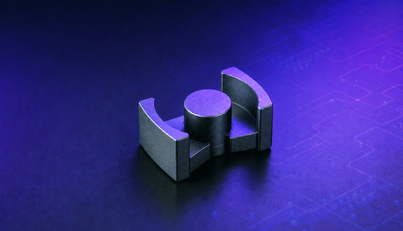
- Core selection is from standard E, EQ, or custom ferrite shapes that we stock by the tens of thousands.
The result? The prototype you receive in 4-6 weeks is electrically and thermally identical to the final production unit. There are no unpleasant surprises when you “switch to hard tooling”.
We’ve had customers take our 6 week prototype, drop it straight into system-level EMC and thermal validation, and freeze the design without a single magnetics change. That simply doesn’t happen in the wire-wound world.
Payton’s Fully Vertical Agile Development Process
Here’s exactly how we turn a napkin sketch or detailed specification into production parts faster than anyone else in the industry.
Week 0-1: Deep-Dive Technical Alignment
You send us the electrical spec, mechanical envelope, thermal constraints, and regulatory requirements (UL/IEC 62368-1, DO-160, IPC-9592B, etc.). Our application engineers, all senior power designers themselves, run preliminary simulations in LTspice/Ansys and propose two or three winding/interleaving options the same week. You communicate directly with the people who will sign the drawings.
Week 2-4: Rapid Prototype Build
While most companies are still waiting for bobbin tooling, we’re already laying out the PCB or cutting the first stamped windings on our in-house Bruderer and Yamada presses.
Typical timeline:
- PCB-based prototypes: 10-15 working days from layout freeze.
- Stamped-lead-frame prototypes: 3-4 weeks including progressive die samples.
Every prototype is 100% electrically tested (inductance, leakage, resistance, hi-pot, partial discharge, inductance vs. current, core loss) and shipped with a full test report.
Week 5-8: Validation & Optimization Loop
You test the prototypes in your system. We jump on a call the same day you get the data, adjust interleaving, creepage distances, or termination style, and ship revised units in 2-3 weeks. Most programs converge in one or two iterations.
Week 9-16: Production Ramp
As soon as you sign off, we move to full-rate tooling (if needed) and start PPAP/FAI documentation. Because the prototype was already built on production-capable processes, there is zero performance shift.
We’ve taken projects from kick-off to 1000-piece pilot runs in 14 weeks and full volume (10k-50k pcs/month) in under six months.
Overcoming Common Challenges in Agile Magnetics Development
Speeding up development isn't just about faster tooling, it's about anticipating the roadblocks that derail even the best-laid plans. At Payton, our decades of planar-only experience help us navigate these issues seamlessly, turning potential delays into quick wins.
Here are some of the most frequent challenges we see, and how our agile process overcomes them:
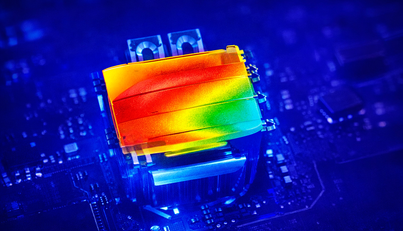
- Thermal Management Mismatches: high-frequency designs often run hotter than simulations predict due to real-world parasitics. We address this upfront with in-house thermal imaging and Ansys modeling, ensuring prototypes incorporate optimized interleaving and cooling paths from day one. This avoids the common 4-6 week redesign loop others face.
- Regulatory Compliance Hurdles: meeting standards like AEC-Q200 for automotive or MIL-STD-810 for defense can add months if magnetics fail initial hi-pot or partial discharge tests. Payton's library of pre-qualified insulation systems and reinforced materials means we build compliance early. Our prototypes routinely pass on the first try, saving 8-12 weeks of iteration.
- Supply Chain Volatility: external vendors for cores or windings can cause unpredictable delays, especially with global shortages. By stocking over 100,000 ferrite cores and handling all stamping/PCB fab internally, we eliminate this risk entirely. Customers tell us this alone has shaved 10-15 weeks off their timelines compared to traditional suppliers.
- Scalability from Prototype to Volume: many "quick" prototypes use hand-built methods that don't translate to production, leading to performance drifts or yield issues later. Our approach uses identical processes for both, so what you validate at week 6 scales flawlessly to 50,000 units per month.
These strategies aren't theoretical, they're battle-tested across thousands of programs, ensuring your project stays on track no matter the complexity.
Why Payton Can Deliver This Speed Reliably
- 100% in-house everything: design, stamping, PCB fabrication, lamination stacking, vacuum varnish, laser welding, electrical testing, environmental chambers. Nothing leaves our facilities in Israel or our partners in Eastern Europe.
- 38+ years of planar-only focus: we’re not a wire-wound house that added planar as an afterthought. Every process is optimized for flat windings and low-profile cores.
- Massive standard platform library: over 5,000 proven designs covering 10 W to 20 kW, 50 kHz to 1 MHz, 100 V to 10 kV insulation. Most new projects start 70-80% finished.
- Dedicated prototype cell: separate from production but using identical equipment, so there’s never a capacity conflict when a customer needs parts yesterday.
- Engineering culture that moves at startup speed with tier-one discipline: daily stand-ups, concurrent engineering, and zero tolerance for hand-offs.
The Bottom-Line Impact of Agile Magnetics Development
Getting your magnetics right, fast, delivers compounding advantages:
- Validate your topology before your semiconductor allocation expires.
- Lock in the design win while competitors are still waiting for samples.
- Reduce program risk: no last-minute magnetics respins that blow schedules and budgets.
- Bring products to market 6-12 months earlier and capture the margin premium that early movers enjoy.
In industries where the technology cycle is measured in months, not years, waiting half a year for a transformer is commercial suicide.
Payton Group exists for exactly these programs, the ones that can’t wait. If you’re tired of magnetics being the bottleneck on your critical path, let’s talk. We’ll show you a realistic timeline for your specific spec before you even send an NDA.
From prototype to product in weeks - not months. That’s not a slogan. It’s how we’ve operated for decades, and it’s how we’ll help you win tomorrow’s programs today.